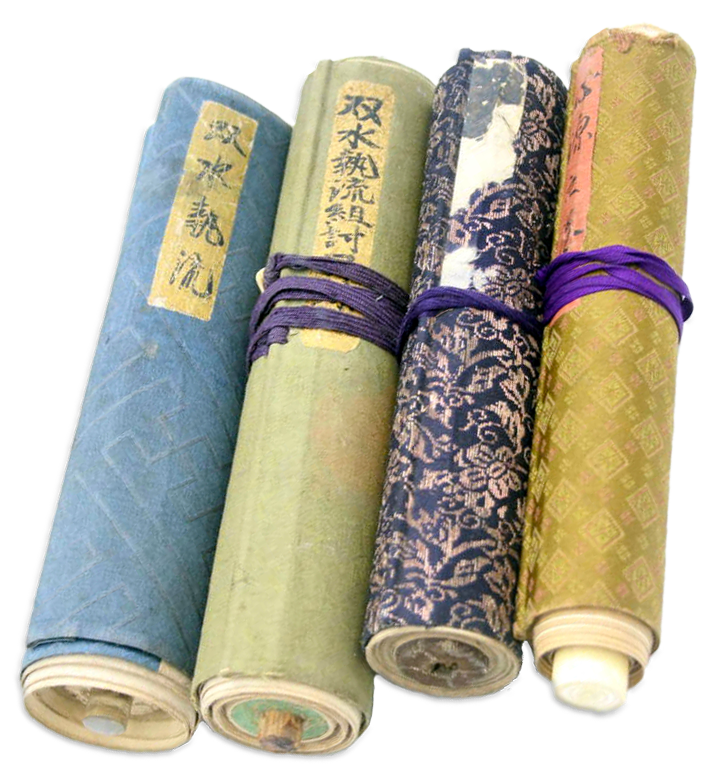
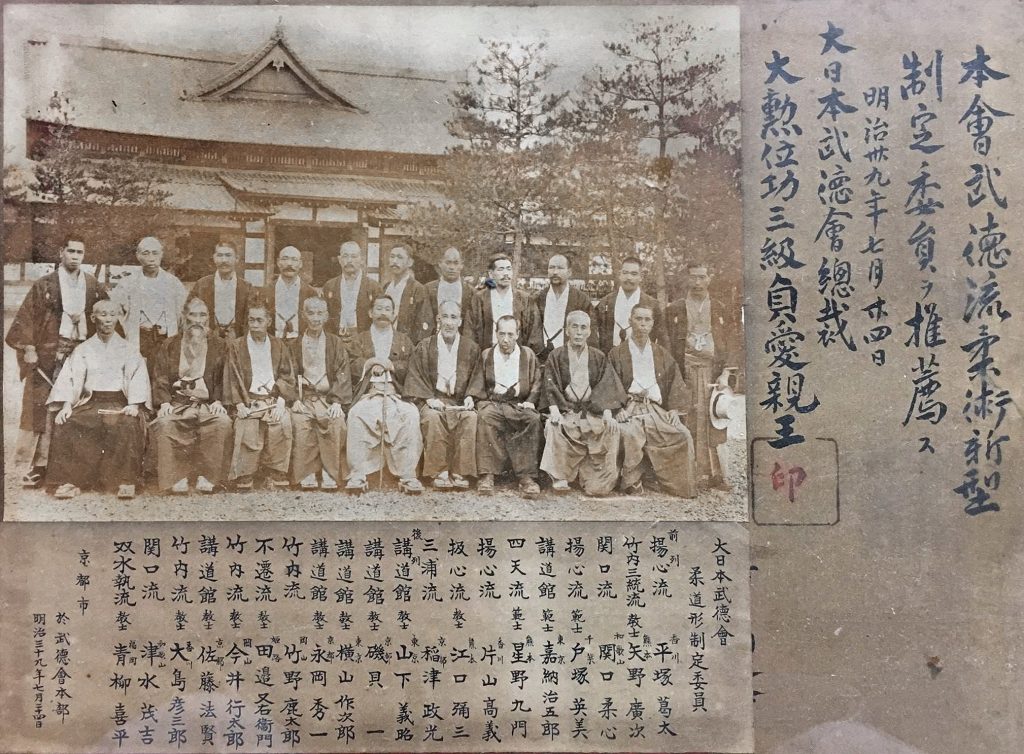
Sōsuishi-ryū 双水執流 is a classical Japanese martial art that originated in the Bungo Taketa district. The art evolved from Futagami-ryū 二上流, which was created in the late 16th century by Futagami Tokishige, who combined Takenouchi-ryū with his battle experience. Later, Futagami Hannosuke Masaaki further developed the system into Sōsuishi-ryū after participating in the Shimabara rebellion. The techniques of the school include Kumiuchi (unarmed combat), Kodachi Kumiuchi (unarmed against a short sword), and Koshi no Mawari (swordsmanship).
The legend of the founding of Sōsuishi-ryū dates back to Futagami Hannosuke Masaaki in 1650 CE. He was a district samurai living in the area of Bungo-Taketa, which was in the domain of Kuroda during the era called Sho-o. (now Ōita and Fukuoka). Masaaki was a practitioner of his family martial art, Futagami-ryū 二上流 and a student of Takenouchi-ryū. He felt the techniques of Futagami-ryū were imperfect, so in order to improve them, he decided to travel all over Japan and train himself by going on a pilgrimage (Musha Shugyō). At one point he went deep into the mountainous, rugged valley of Mt. Yoshino, where for thirty-seven days he trained and sought enlightenment. He refined the finer points of the technique of Futagami-ryū and honed the secret teachings that he had studied. He then assembled them into what he believed was the best of everything he had learned. One day, while he was gazing at the Yoshino River, he noticed the two river branches flowing and swirling together steadily. The training of his mind, body, and spirit converged at that one moment. This event, called Satori in Japanese, prompted him to change the name of Futagami-ryū to Sōsuishi-ryū (twin waters) in remembrance of his experiences at the Yoshino River.
NSJJK banner that hung in the dojo for many years.
Sosuishi-ryu at the Yoshitsune Dojo
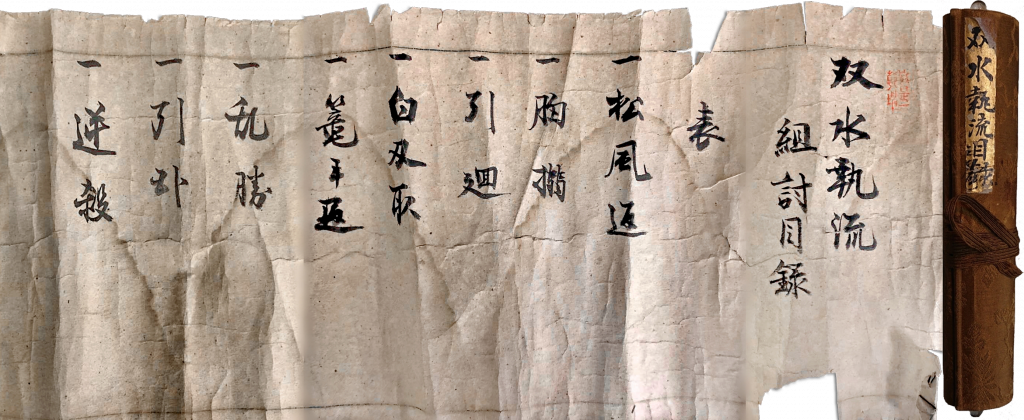
My teacher, Mike Depasquale Sr., held a Sanmokuroku rank in Sosuishi-ryu Jujutsu. He included a number of techniques from this school in the public curriculum he developed for his dojo (Yoshitsune Dojo) that was called “Yoshitsune Waza“. This simply meant the techniques of the Yoshitsune Dojo. He taught Sosuishi-ryu separately on rare occasions in private. He passed along to a select few students old videotapes of the kata and a manuscript that contained a catalog of the Kumiuchi techniques. In my personal library, I maintain video recordings of my teacher demonstrating the techniques from this school during various seminars and from my private training with him held at the Yoshitsune Dojo.
Sosuishi-ryu Kumiuchi Mokuroku (Idori)
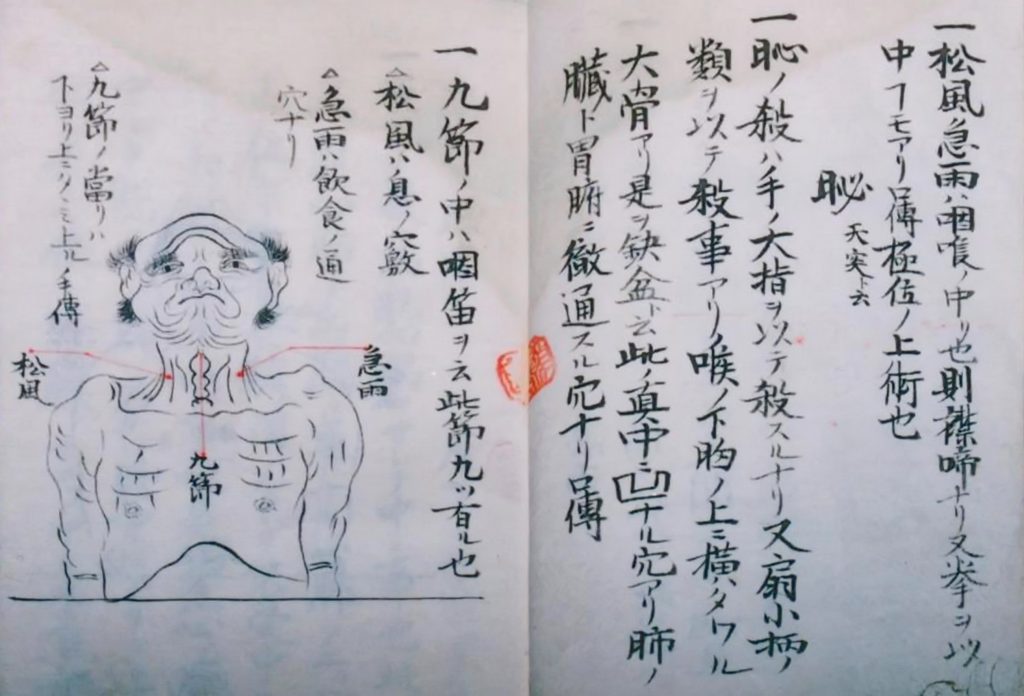
Document detailing Shofu (Matsu Kaze) and other vital points utilized within the techniques of the school.