
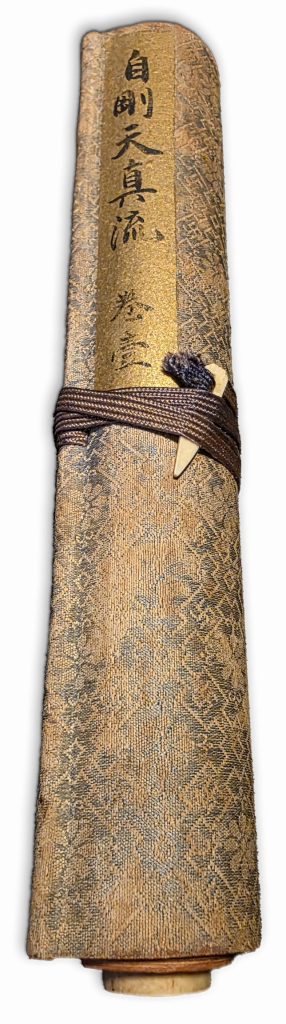
自剛天真流 卷壹
Jigo Tenshin-ryu Menkyo Kaiden Scroll
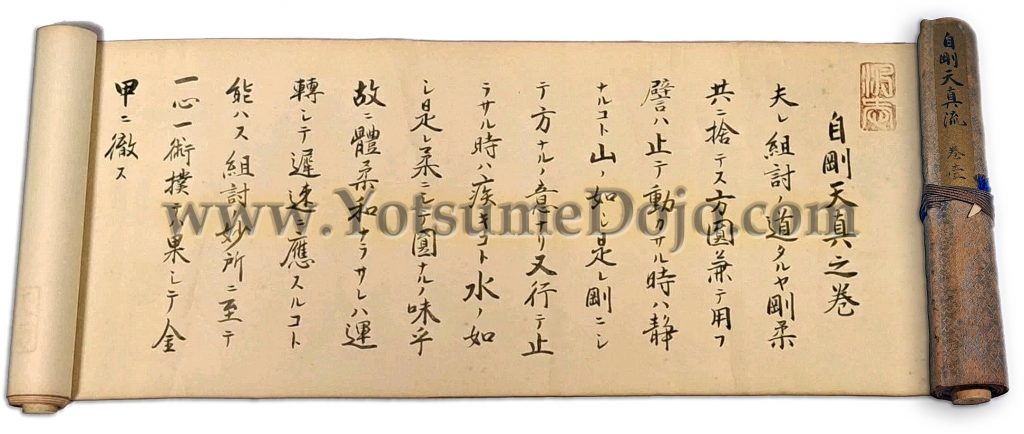
English Translation (v1.0)
by Billy Ristuccia

Secrets of Jigo Tenshin-ryu Kumiuchi
- The way of grappling is to combine hardness and softness. Both are used together interchangeably.
- For example, when you stop and do not move, you are still. This is like a mountain, which is hard.
- When you move and do not stop, you are swift. This is like water, which is soft.
- This is the essence of grappling. Therefore, if the body is flexible, it can respond to changes in speed. This is the essence of combat.
- With a single mind (Isshin 一心) and a single technique (Ijutsu 一術), one can penetrate even the strongest armor.
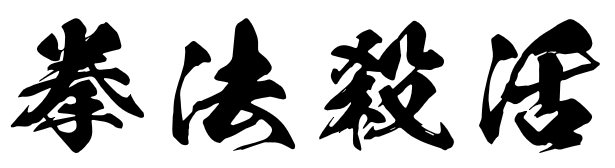
Kenpo Sakatsu
- Among the eight actual techniques of killing and reviving, this is a highly confidential technique that was bestowed upon me and now to you at your request.
- It is said to be a forbidden hole, which means that the enemy will suddenly die.
- The time to strike should be limited to truly important situations.
- If it is not possible to do so, you will lose your composure and end up in great danger.
- It is important to keep this in mind and be prepared for the unexpected.

Jigo Tenshin-ryu Gokui
- NOTE: The Sappo (Killing Methods) have been omitted from this translation.
- The above is the essence of Jigo Tenshin-ryu. Master Shōbayashi Fujiwara Doichi 庄林藤原道一, who passed away, taught the art at the Honkan, and his students excelled in their training. As a result of their great progress and unrivaled dedication in the training, the seniors at the Honkan taught them the secret techniques.
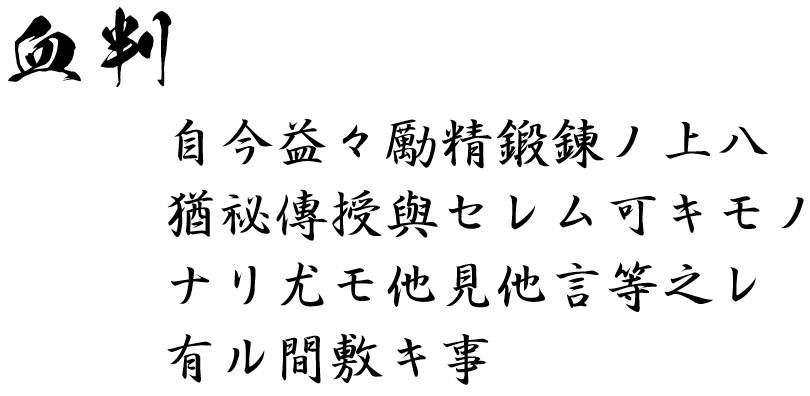
Keppan (Blood Oath)
- From now on, I will continue to train diligently.
- I will keep these eight secret methods secret and not reveal them to anyone.
- I will not show them to anyone else.
- I will not talk about these matters to anyone else.
Rekishi - History
The founder of the school, Fujita Norisada, acquired the Ryoi Shinto-ryu style under Kubo Sadatsugu, a martial arts instructor for the Kuroda domain, and then studied the Yoshin-ryu style, a representative of jujutsu, under Kaiga Tozo Naokata, a martial arts instructor for the Akizuki domain. After receiving the mastery of the secrets, he added his own innovations to the second style and founded the Tase Jitoku Tenshin-ryu style 為勢自得天真流. Fujita Norisada gained great fame and served as a martial arts instructor for the Osaka Magistrate’s Office, but died of illness in 1839 (Tenpo 10).
Kazuma Shindo 進藤一馬 (January 1, 1904 (Meiji 37) – November 28, 1992 (Heisei 4) was a Japanese politician and businessman. After graduating from the School of Political Science and Economics at Waseda University, he served as secretary to Seigo Nakano and as a director of the Kyushu Nippo newspaper, the predecessor of the Nishinippon Shimbun, before becoming president of the Genyosha. After the war, he joined the Liberal Democratic Party, served as a member of the House of Representatives, and served four terms as mayor of Fukuoka City.
Shodo Calligraphy by Kazuma Shindo

(Small Righteousness)
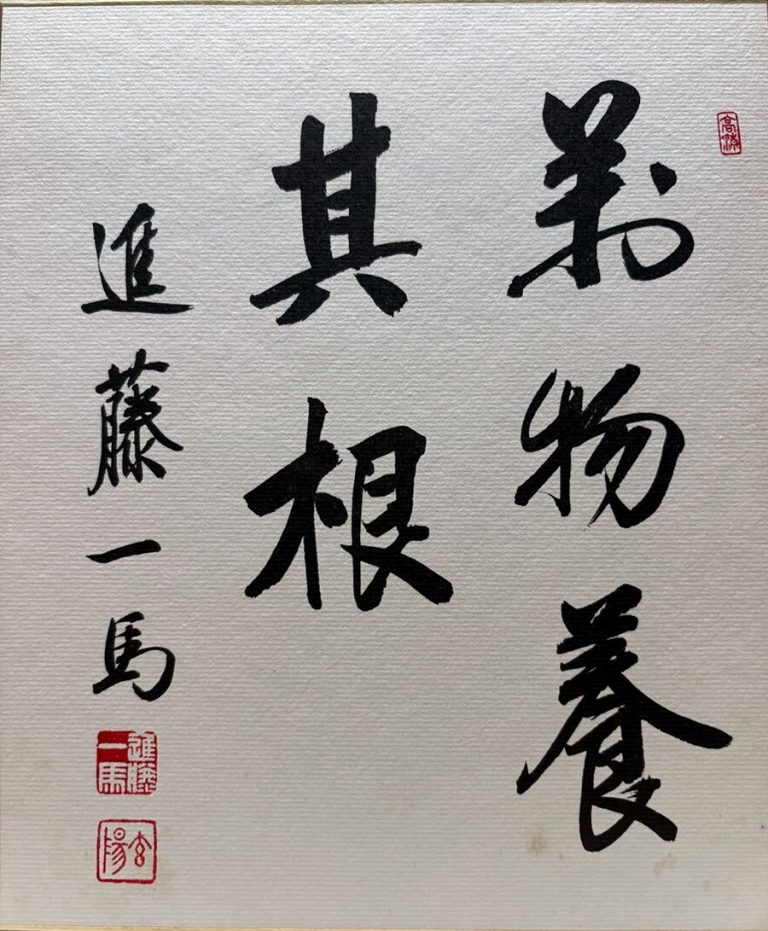
(All things nourish their roots \ The root of all things)